
$86.00
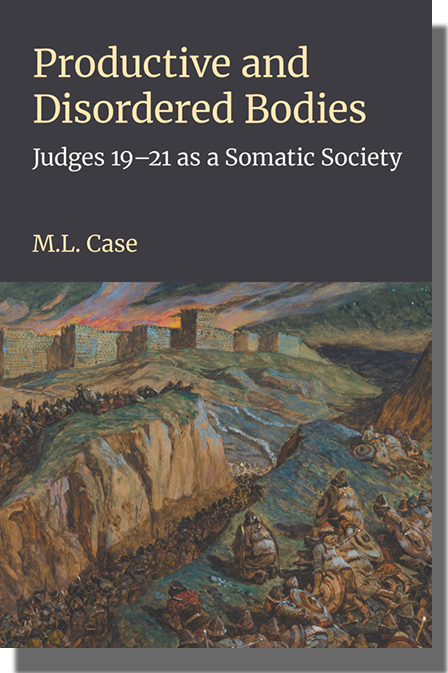
M. L. Case focuses on the depiction of bodies as both productive bodies which are useful for society and as disordered bodies that contribute to social breakdown in Judges 19–21. Written as an idealized example of ancient Israelite pre-monarchic society, Judges 19–21 relates the story of the rape and death of the Levite’s wife (pîlegeš), the subsequent civil war, and the attempts of the Israelite factions to reconcile at the end of the conflict. In her examination of the pericope, Case examines how female and male bodies are portrayed and how their regulation functions in this society.
Case uses social-scientific theories outlining the importance of bodies to social organization, particularly Bryan Turner’s concept of a somatic society. The resulting interpretation argues that this story describes an ideal scenario of the success of Israelite society in overcoming their inter-tribal conflict without a king. This sits in divergence to scholars who have viewed Judges 19–21 as a story which points toward the unavoidable rise of the monarchy.
Instead, this monograph proposes that the exchange of women in Judges 21 makes it possible for the Benjaminite War to end in peace. The society depicted in this pericope depends on the proper control of bodies, both male and female: improper regulation, such as the lack of hospitality for a foreign body, occasions social disorder, while correct regulation of bodies, such as providing hospitality to foreign bodies or limiting who has sexual access to female bodies, results in social harmony. The exchanged women’s bodies, then, critically serve as both the means and location for rapprochement.
SBL Press is the North American distributor for Sheffield Phoenix Press. Customers outside of North America can purchase this book directly from Sheffield Phoenix by clicking here.
Request a review copy from Sheffield Phoenix Press.