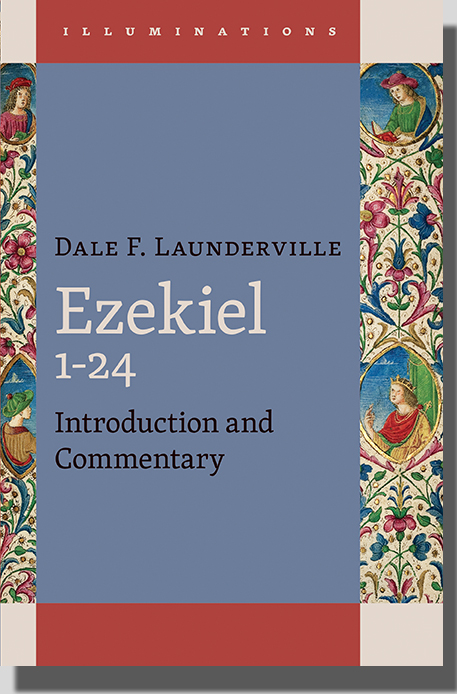
Ezekiel 1–24: Introduction and Commentary
Dale F. Launderville
Publication Date
July 2026
eBook
$80.00
In volume 1 of his cutting-edge two-volume commentary, Dale F. Launderville relies on the Hebrew, Old Greek, Aramaic, Syriac, and Latin texts of Ezekiel to produce a fresh translation of the first twenty-four chapters. Each passage is followed by interpretive sections that emphasize the history of reception, explaining how the text of Ezekiel has sparked the imagination of subsequent thinkers, writers, and artists. Each chapter concludes with a section of commentary dedicated to a historical-critical examination of the canonical text. Readers will become more equipped to interpret Ezekiel and more confident in their understanding of Old Testament prophecy and its relevance to contemporary issues in church and society. This is an essential resource for ministers, seminary students, and teachers of biblical studies courses.
Dale F. Launderville is a Benedictine monk of St. John’s Abbey in Minnesota. He holds a PhD in Semitics from the Catholic University of America and teaches theology at St. John’s University. He is the author of several books, including Piety and Politics, Spirit and Reason, and Celibacy in the Ancient World.
Praise for Ezekiel 1-24: Introduction and Commentary
“This is a breathtakingly broad-ranging, widely read, deeply reflective, thought-provoking, bountifully informative study. It is in a class of its own among commentaries on Ezekiel.”
—John Goldingay, Fuller Seminary
“Launderville’s commentary is a tour de force! He explains the complex images in the book in clear prose. He also combines the standard research found in other commentaries with insightful discussion of ancient Near Eastern backgrounds and the ongoing relevance of the text for later interpretive communities. This is a must-have for any scholar of the book of Ezekiel.”
—Corrine L. Carvalho, University of St. Thomas
“Dale Launderville’s Ezekiel 1–24 is a learned and luminous guide that invites readers not only to hear Ezekiel’s voice but also to follow the long conversation it has sparked across centuries. Readers will easily see what the text has come to mean in communities, liturgies, and culture at large. Launderville regularly pauses to show how Ezekiel has been reimagined in Jewish, Christian, and Muslim settings and in the arts, architecture, theater, and music. The result is a commentary that connects close reading to living reception so that even opaque passages open onto contemporary insight. This is reception history at its best: generous in scope, judicious in detail, and deeply readable for scholars, students, and all thoughtful readers.”
—Stephen L. Cook, Virginia Theological Seminary
Review copy requests should be entered into our online form.